Last updated: September 28, 2026
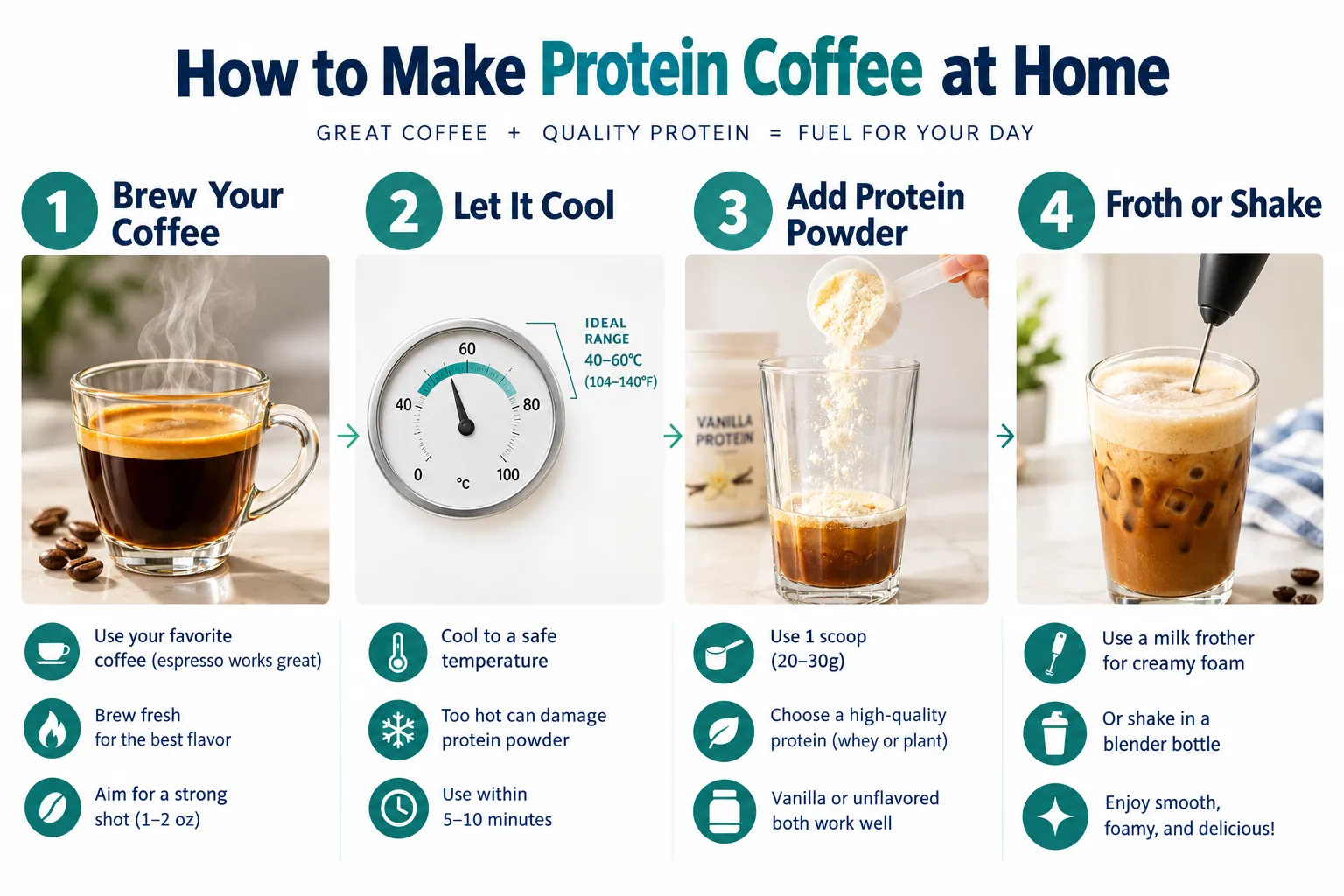
To make protein coffee, brew a strong cup of coffee or a double shot espresso, let it cool slightly, then blend or froth in one scoop of protein powder with your choice of milk until smooth. The result is a high protein coffee drink that delivers both caffeine and 20-30 grams of protein in a single cup, making it one of the most efficient ways to start your day.
Key Takeaways
- Protein coffee combines brewed coffee or espresso with protein powder and milk for a high protein, caffeinated drink.
- Use a handheld frother or blender to mix protein powder smoothly, no shaker bottle required.
- Vanilla protein powder is the most popular flavor choice because it pairs naturally with coffee.
- Both hot and iced versions work well; iced coffee versions are easier to mix without clumping.
- One serving typically delivers 20-30 grams of protein depending on the powder you use.
- Vegan options work just as well, use plant-based protein powder and oat milk or another non-dairy milk.
- Protein coffee can support weight loss and muscle building when used as part of a balanced diet.
- The cheapest way to make it at home is with instant coffee and a budget whey or pea protein powder.
What Is Protein Coffee and How Does It Work
Protein coffee is exactly what it sounds like: coffee with protein powder mixed in. You get the caffeine boost from the coffee and the muscle-supporting amino acids from the protein powder in one drink. The caffeine in coffee can also help your body use fat for energy more efficiently, according to research published in the Journal of the International Society of Sports Nutrition.
The way it works is simple. Protein powder dissolves into liquid, and coffee is just a liquid. The key is temperature and mixing method. Hot coffee can cause some protein powders to clump or denature, so you need to mix carefully. Cold or room-temperature coffee makes the process easier and gives you a smoother iced protein coffee.
Why This Protein Coffee Recipe Works
This protein coffee recipe is fast, flexible, and genuinely filling. You can make it hot or iced, with dairy milk or oat milk, and with almost any flavor of protein powder. It takes under five minutes, uses ingredients you probably already have, and replaces both your morning coffee and your protein shake in one cup.
Why people love this recipe:
- Saves time by combining two morning habits into one
- Easy to customize for vegan, dairy-free, or low-sugar diets
- Works as a pre-workout drink or a post-workout recovery option
- Cheaper than buying ready-made protein coffee drinks at a cafe
For more coffee drink ideas, check out this iced mochaccino recipe that also works well with a protein boost.
Ingredients for a Basic Protein Coffee Recipe
A good protein coffee recipe needs just four core ingredients. Everything else is optional based on your taste and goals.
Core ingredients:
- 1 cup brewed coffee or a double shot espresso (about 2 oz)
- 1 scoop protein powder (vanilla protein powder or chocolate work best)
- 1/2 cup milk of your choice (dairy, oat milk, almond, or coconut milk)
- Ice (for an iced coffee version)
Optional add-ins:
- 1/4 teaspoon vanilla extract for extra flavor
- A pinch of cinnamon for a snickerdoodle cashew coffee vibe
- 1 teaspoon sugar or a sugar-free sweetener if your powder isn’t sweetened
- A tablespoon of cocoa powder for a mocha-style version (dairy-free whipped coffee fans love this)
Nutrition snapshot per serving (approximate):
- Calories: 150-200
- Protein: 20-25 grams
- Fat / sat fat: 2-5g depending on milk choice
- Carbohydrate / fiber / sugar: 5-10g
- Fiber / sugar / protein ratio improves significantly when you use unsweetened milk and a low-sugar protein powder
Best Protein Powder for Coffee: What to Use
The best protein powder for coffee is one that dissolves easily and doesn’t taste chalky. Whey protein isolate mixes the smoothest in both hot and iced coffee. For vegan options, a pea protein blend or a rice and pea protein combination works well and doesn’t add a strong flavor.
Top picks by category:
- Best overall: Whey protein isolate, mixes clean, high in leucine for muscle protein synthesis (source: NIH)
- Best vegan: Pea protein powder, research shows it performs comparably to whey for muscle gains
- Best flavor pairing: Vanilla protein powder, pairs naturally with espresso and oat milk
- Premium option: Puori PW1 protein powder, a grass-fed whey option from Puori that many real food dietitians recommend because it has minimal ingredients and no artificial additives
Choose X if:
- You want the smoothest mix: use whey isolate
- You’re vegan or lactose intolerant: use pea or hemp protein powder
- You want a dessert-style drink: use vanilla protein or chocolate protein powder
- You’re watching sugar: check that your protein powder has under 3g sugar per serving
How to Make Protein Coffee: Step-by-Step Instructions
Making protein coffee at home is a five-minute process. Here are the instructions for both hot and iced versions.
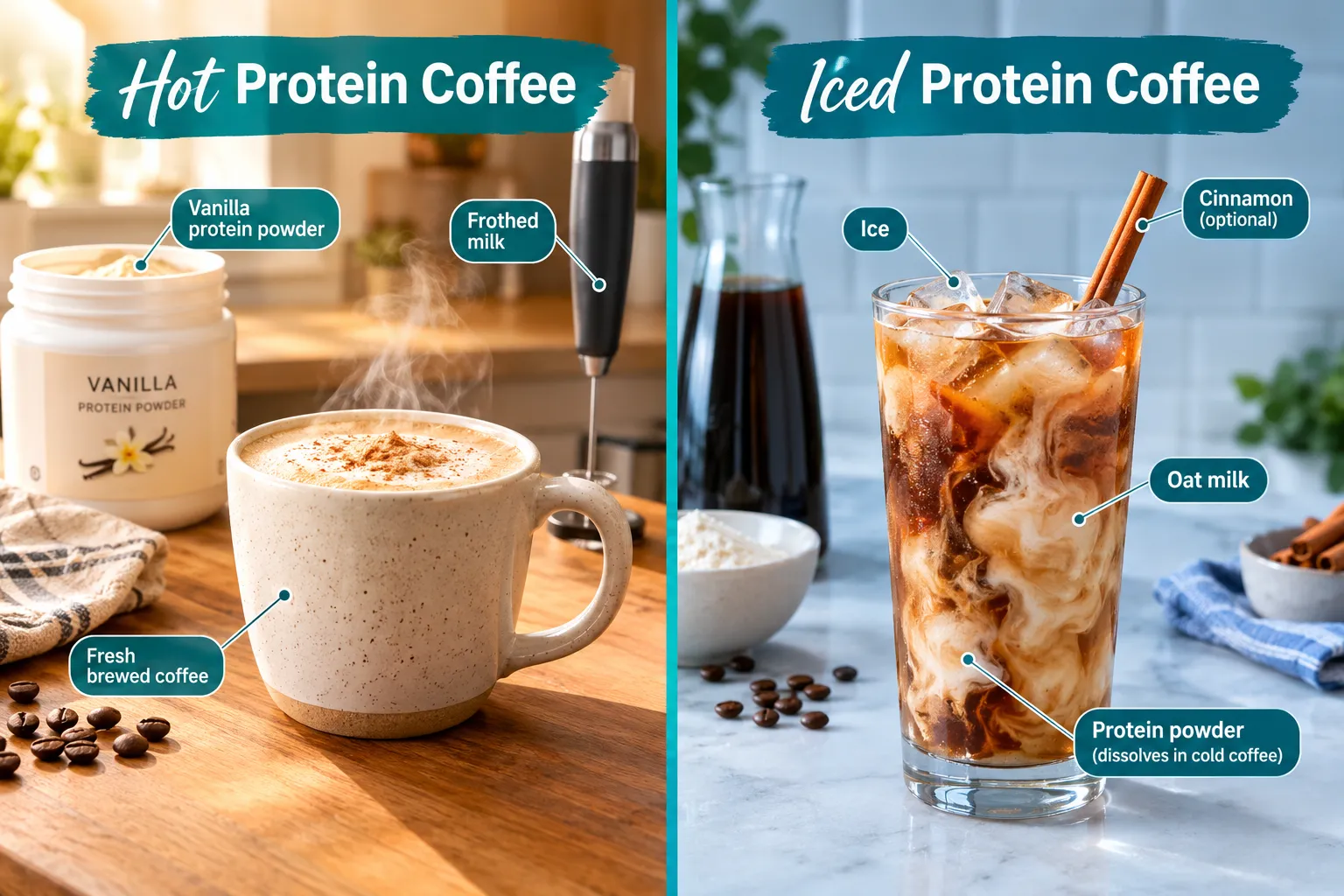
For iced protein coffee (easiest method):
- Brew 1 cup of strong coffee or pull a double shot espresso. Let it cool for 5 minutes or pour over ice immediately.
- In a tall glass, add 1 scoop of protein powder and 2-3 tablespoons of cold milk. Stir into a paste first, this prevents clumping.
- Pour the cooled coffee into the glass slowly while stirring.
- Add ice and the remaining milk.
- Use a handheld frother for 15-20 seconds to get a smooth, frothy finish.
- Taste and add vanilla extract or sugar if needed.
- Pour and enjoy immediately.
For hot protein coffee:
- Brew your coffee. Let it cool to below 140°F (60°C) before adding protein powder. Heat above this point can denature whey protein and cause clumping, according to food science data from the USDA.
- Mix 1 scoop of protein powder with 2 tablespoons of cold milk in a separate small cup first.
- Slowly stir the protein paste into your warm coffee.
- Use a frother to blend until smooth.
- Add vanilla extract or cinnamon to taste.
For a related warm coffee drink, see how to make café con leche at home, the same milk-frothing technique applies.
No Shaker Bottle? Use a Frother to Mix Protein Powder
You don’t need a blender or shaker bottle to make smooth protein coffee. A handheld milk frother is the best tool for the job and costs around $8,$15. It creates enough agitation to dissolve protein powder completely in under 30 seconds.
Other mixing options that work:
- Blender: Best for a thick, shake-style protein coffee. Add all ingredients and blend for 20 seconds.
- Mason jar with lid: Add ingredients, seal, and shake vigorously for 30 seconds. Works for iced versions.
- Milk frother: Fastest option for a single cup. Froth directly in the glass.
- Shaker bottle: Works well for iced coffee. Add ice last to avoid pressure buildup.
Common mistake: Adding protein powder directly to hot coffee without pre-mixing it creates lumps that don’t dissolve. Always make a paste first with a small amount of cold milk before adding hot liquid.
Can You Mix Protein Powder in Hot Coffee
Yes, you can mix protein powder in hot coffee, but temperature matters. Keep your coffee below 140°F before adding protein powder to avoid clumping and to preserve the protein’s amino acid structure. Whey protein begins to denature at higher temperatures, which affects texture more than nutritional value, but it makes the drink grainy and unpleasant.
The safest method is to let your coffee cool for 3-5 minutes after brewing, or to pre-mix your protein powder with cold milk before stirring into the hot coffee. This protein coffee recipe works hot or iced, the iced version is simply more forgiving for beginners.
Protein Coffee Recipe with Milk: Dairy and Vegan Options
Adding milk to your protein coffee recipe improves texture, adds creaminess, and boosts the overall protein content. The type of milk you use changes the flavor profile and macros significantly.
Milk options compared:
| Milk Type | Protein per cup | Best for |
|---|---|---|
| Whole dairy milk | 8g | Richest flavor, highest protein milk |
| Oat milk | 3-4g | Vegan, creamy texture, mild sweetness |
| Almond milk | 1g | Low calorie, light flavor |
| Soy milk | 7g | Best vegan protein milk option |
| Coconut milk | 0.5g | Rich, dairy-free whipped coffee style |
For a vegan protein coffee, combine pea protein powder with oat milk and cold brew. This gives you a naturally sweet, creamy iced protein coffee without any dairy. Real food dietitians often recommend this combination because oat milk’s natural sugars balance the earthy taste of plant-based protein powders.
How Much Protein Powder Should I Add to Coffee
One scoop of protein powder per serving is the standard amount, which typically delivers 20-25 grams of protein. Adding more than one scoop to a single cup of coffee can make the drink too thick and overly sweet, and it may cause digestive discomfort.
According to research from the American Journal of Clinical Nutrition, the body can effectively use around 25-40 grams of protein per meal for muscle protein synthesis. One scoop in your morning coffee is enough to make a meaningful contribution to your daily protein target without overdoing it.
Practical guide:
- 1 scoop (20-25g protein): standard morning coffee protein shake
- 1.5 scoops: if you’re using it as a full meal replacement
- 0.5 scoop: if you just want a small protein boost without changing the flavor much
Protein Coffee for Weight Loss and Muscle Building
Protein coffee can genuinely support weight loss and muscle building when used as part of a balanced diet. Protein increases satiety, meaning you stay full longer and eat less throughout the day. A 2015 meta-analysis in the American Journal of Clinical Nutrition found that higher protein intake is consistently linked to reduced body weight and fat mass.
Coffee itself also has a role. Caffeine has been shown to increase metabolic rate by 3-11%, which can support fat loss over time. Combining the two in one high protein coffee drink makes practical sense for anyone trying to lose weight without losing muscle.
For muscle building, the key is timing. Drinking protein coffee before or after a workout gives your muscles the amino acids they need to repair and grow. Both windows work, pre-workout gives you energy and primes muscle protein synthesis, while post-workout accelerates recovery. If you’re curious about coffee and weight loss more broadly, this guide on Arabica coffee for weight loss covers the science in detail.
Protein Coffee vs Protein Shake: Which Is Better
Protein coffee is better than a plain protein shake if you want caffeine, fewer calories, and a faster morning routine. A protein shake made with milk protein powder and fruit is better if you want more calories, carbohydrates, and a post-workout recovery drink without caffeine.
Choose protein coffee if:
- You want to combine your morning coffee and protein in one drink
- You’re in a calorie deficit and want a low-calorie, high protein option
- You work out in the morning and want pre-workout energy
Choose a protein shake if:
- You work out in the evening and don’t want caffeine late in the day
- You need more calories and carbohydrates for recovery
- You prefer a thicker, more filling drink
For shake-style recipes, our coffee protein smoothie recipe and 7 coffee protein smoothies give you plenty of options that bridge both worlds.
Protein Coffee Side Effects and Stomach Issues
Some people experience bloating, gas, or an upset stomach when they first start drinking protein coffee. This is usually caused by lactose in whey protein concentrate, artificial sweeteners in flavored protein powders, or drinking it on an empty stomach.
How to avoid stomach issues:
- Use whey protein isolate instead of concentrate, it has less lactose
- Choose a vegan protein powder if you’re lactose intolerant
- Eat a small amount of food alongside your protein coffee
- Start with half a scoop and increase gradually
- Avoid protein powders with sugar alcohols (sorbitol, xylitol) if you have a sensitive stomach
Coffee itself is acidic, and adding protein powder doesn’t reduce that acidity. If you find the combination irritates your stomach, try cold brew coffee instead, it’s up to 67% less acidic than hot-brewed coffee, making it gentler on digestion.
Cheapest Way to Make Protein Coffee at Home
The cheapest way to make protein coffee at home is to use instant coffee and a budget-friendly whey or pea protein powder. A 5-pound bag of whey protein powder costs around $30,$50 and provides 60-70 servings, putting the protein cost at under $0.75 per cup. Add $0.10,$0.20 for instant coffee and $0.15 for oat milk, and your total cost per serving is under $1.10.
Budget protein coffee recipe:
- 1 teaspoon instant coffee dissolved in 2 oz hot water
- 1 scoop vanilla protein powder
- 1/2 cup oat milk or water
- Ice for an iced coffee version
- Optional: vanilla extract and a pinch of cinnamon
This is the way to start if you’re new to protein coffee. You don’t need an espresso machine or a fancy blender. A fork or a mason jar works fine for mixing, and the result is a solid high protein coffee that costs almost nothing per serving.
Try These Coffee Recipes Next
Once you’ve mastered the basic protein coffee recipe, these variations are worth trying:
- Cinnamon coconut latte: Replace dairy milk with coconut milk, add 1/4 teaspoon cinnamon and vanilla protein powder. Rich, dairy-free, and naturally sweet.
- Dairy-free whipped coffee: Make a whipped coffee base with instant coffee, sugar, and hot water, then fold in a scoop of vegan protein powder and pour over oat milk and ice.
- Healthy mocha frappe (dairy-free): Blend cold brew coffee, chocolate protein powder, oat milk, ice, and a tablespoon of cocoa powder. Thick, chocolatey, and filling.
- Snickerdoodle cashew coffee: Use vanilla protein powder, a splash of cashew milk, cinnamon, and cold brew for a dessert-style iced coffee that still hits your protein goals.
- Protein iced coffee (classic): Double shot espresso over ice, vanilla protein powder pre-mixed with cold oat milk, poured together and frothed. Clean, simple, and easy to make every morning.
For more inspiration, the milky way latte recipe is another easy coffee drink that you can adapt with protein powder.
Nutrition Information and Dietary Notes
A standard protein coffee recipe made with one scoop of vanilla whey protein, 1/2 cup oat milk, and one cup of brewed coffee contains approximately:
- Calories: 160-180
- Protein: 22-25g
- Fat / sat fat: 2.5g / 0.5g
- Carbohydrate / fiber / sugar: 8g / 1g / 4g
- Sugar / protein / cholesterol: 4g / 23g / 15mg
Dietary notes:
- Gluten-free: Yes, if your protein powder is certified gluten-free
- Vegan: Yes, when using plant-based protein powder and non-dairy milk
- Dairy-free: Yes, with vegan protein and oat milk or almond milk
- Keto-friendly: Use unsweetened almond milk and an unflavored or stevia-sweetened protein powder
Whether you’re tracking macros or just want a quick, filling morning drink, this recipe fits most dietary patterns with simple swaps.
FAQ: People Also Ask
Can you make coffee with protein powder?
Yes, you can make coffee with protein powder. Simply brew your coffee, let it cool slightly, mix one scoop of protein powder with a small amount of cold milk to form a paste, then stir or froth it into your coffee. Both hot and iced versions work well. Vanilla protein powder and chocolate protein powder are the most popular flavor choices for this recipe.
Is protein coffee actually good for you?
Protein coffee is good for you when made with quality ingredients and consumed as part of a balanced diet. It provides 20-25 grams of protein per cup, which supports muscle repair and satiety. The caffeine in coffee can boost metabolism and focus. The main thing to watch is sugar content in flavored protein powders, choose low-sugar options to keep the drink genuinely healthy.
What is the best protein to mix with coffee?
Whey protein isolate is the best protein to mix with coffee because it dissolves smoothly and has a neutral flavor that pairs well with espresso and milk. For vegan options, pea protein powder is the top choice. Vanilla protein powder is the most popular flavor because it enhances coffee’s natural taste without overpowering it. Avoid casein protein, it clumps badly in liquid.
How to make hot protein coffee at home?
To make hot protein coffee at home, brew one cup of coffee or pull a double shot espresso and let it cool to below 140°F. Mix one scoop of vanilla protein powder with two tablespoons of cold milk in a separate cup until it forms a smooth paste. Stir the paste into your warm coffee, then use a handheld frother to blend until smooth. Add vanilla extract or cinnamon to taste and serve immediately.
Conclusion
Protein coffee is one of the most practical ways to get more protein into your day without adding extra meals or prep time. The basic recipe takes five minutes, costs under $1.50 per serving at home, and works whether you prefer hot or iced coffee, dairy or vegan milk, whey or plant-based protein powder.
Actionable next steps:
- Pick a protein powder that fits your diet, vanilla protein powder for most people, pea protein for vegan drinkers.
- Try the iced version first if you’re a beginner, it’s easier to mix and harder to mess up.
- Use a handheld frother for the smoothest result without a blender.
- Experiment with the cinnamon coconut latte or dairy-free whipped coffee variations once you’ve got the base recipe down.
- Track your protein intake for a week to see how protein coffee helps you hit your daily goals.
Start with one cup tomorrow morning. It’s a small change that adds up fast.
References
- Journal of the International Society of Sports Nutrition, Caffeine and fat oxidation (2021)
- NIH, Leucine and muscle protein synthesis (2019)
- NIH, Pea protein vs whey protein for muscle gains (2015)
- USDA, Whey Protein Concentrate technical data
- American Journal of Clinical Nutrition, Protein per meal and muscle synthesis (2013)
- American Journal of Clinical Nutrition, Protein and body weight meta-analysis (2015)
- NIH, Caffeine and metabolic rate (2015)
- NIH, Cold brew coffee acidity study (2018)
- Puori PW1 Pure Whey Protein