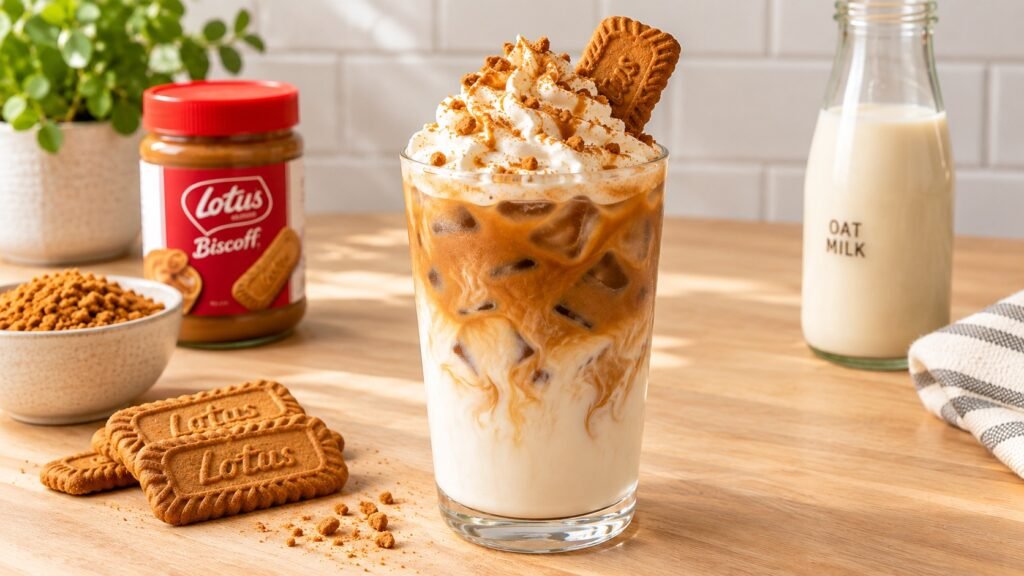
If you’ve tasted a Biscoff cookie that little caramelized biscuit airlines hand out you already know the flavor: warm, slightly spiced, deeply caramelized, almost butterscotch-like. This biscoff iced latte recipe takes that exact taste and turns it into a cold coffee drink you can make at home in about five minutes. No special equipment needed, no coffee-shop markup required.
The secret is knowing how to handle the Biscoff cookie butter so it blends smoothly into your drink rather than floating in clumps. Once you know that one trick, the rest is straightforward.
What Biscoff Actually Is (And Why It Works in Coffee)
Biscoff is the brand name for Lotus Biscoff speculoos cookies — a Belgian caramelized biscuit with a distinctive flavor that sits somewhere between cinnamon, brown sugar, and toffee. The cookies have been around since the 1930s, but Biscoff Cookie Butter (a spread made from ground Biscoff cookies) is what makes drinks like this possible.
The spread comes in smooth and crunchy varieties. For a latte, always use smooth crunchy will leave small cookie bits in your drink, which sounds fun but doesn’t work well through a straw.
You can find Biscoff Cookie Butter at most major US grocery stores (Target, Walmart, Kroger, Whole Foods) near the peanut butter, or online. Trader Joe’s sells a similar product called Speculoos Cookie Butter if Biscoff is hard to find locally.
Ingredients
Serves 1
| Ingredient | Quantity |
|---|---|
| Biscoff Cookie Butter (smooth) | 1½ tablespoons |
| Hot espresso (or strong coffee) | 2 shots / 2 oz |
| Milk of your choice | ¾ cup (6 oz) |
| Ice | 1 generous cup |
| Optional: brown sugar or simple syrup | ½ teaspoon, to taste |
| Optional: pinch of cinnamon | For garnish |
| Optional: whipped cream + crushed Biscoff cookie | For topping |
A note on sweetness: Biscoff spread is already sweet. Most people don’t need any added sugar. Taste before adding any.
How to Make a Biscoff Iced Latte
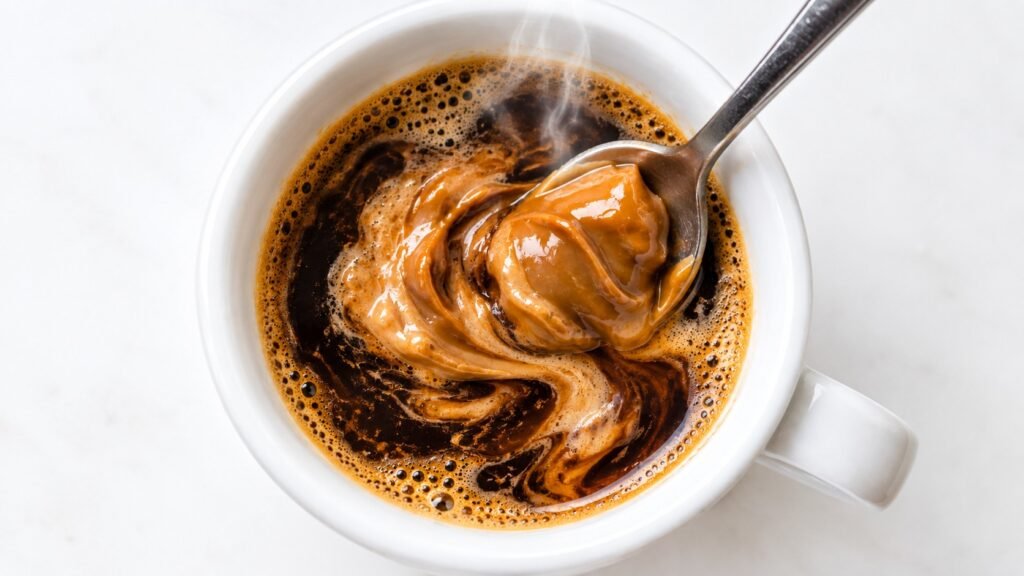
Step 1: Make the Biscoff Sauce
This is the most important step and the one most people skip then wonder why their drink is lumpy.
Add 1½ tablespoons of Biscoff Cookie Butter to a small cup or the bottom of your glass. Pour your freshly brewed hot espresso directly over the spread. Stir vigorously for about 20–30 seconds until the spread dissolves completely and you have a smooth, glossy Biscoff espresso sauce.
The heat does the work. Biscoff spread is fat-based, and it won’t dissolve in cold liquid no matter how hard you stir. Always mix it with something hot.
Shortcut: If you want to prep the sauce ahead of time, mix 1½ tablespoons of Biscoff spread with 2 tablespoons of near-boiling water. Stir until smooth. This makes a thinner Biscoff sauce you can pour directly into cold drinks without needing to wait for coffee to brew.
Step 2: Let It Cool (Briefly)
Let the Biscoff espresso mixture sit for 2–3 minutes, or pour it over a single ice cube in a separate small cup to cool it quickly. You don’t want to pour scalding liquid directly over a glass full of ice — it dilutes the drink fast.
Step 3: Build Your Latte
Fill a large glass with ice. Pour in your milk. Then pour the cooled Biscoff espresso over the top.
Stir gently — or leave it unstirred for a layered look before mixing.
Step 4: Taste and Adjust
Take a sip. If you want it sweeter, add a small drizzle of simple syrup or half a teaspoon of brown sugar dissolved in a tiny bit of hot water. If it tastes too sweet already, you’ve done nothing wrong — the spread carries a lot of sugar on its own.
Step 5: Garnish and Serve
A dusting of cinnamon or a crumbled Biscoff cookie on top looks great and adds a small crunch with every sip. Whipped cream works too if you want something more indulgent.
Milk Pairing Guide
The milk you use genuinely changes the drink, so it’s worth thinking about rather than just grabbing whatever’s in the fridge.
| Milk | Flavor Result | Best For |
|---|---|---|
| Oat milk | Creamy, slightly sweet, complements caramelized notes | Best overall pairing |
| Whole milk | Rich, neutral, lets Biscoff flavor shine | Classic, indulgent version |
| 2% milk | Lighter but still creamy | Everyday option |
| Almond milk | Slightly nutty, thinner texture | Dairy-free, lighter drink |
| Coconut milk | Tropical, rich — can overpower the Biscoff | Use sparingly or if you enjoy the combo |
| Oat-cashew blends | Very smooth and barista-friendly | Worth trying if available |
Oat milk is the top recommendation here. Its natural mild sweetness and creaminess pair almost perfectly with the caramelized flavor of Biscoff. Many baristas choose oat milk for cookie butter drinks for exactly this reason.
Making It Without an Espresso Machine
You don’t need an espresso machine to make a great Biscoff iced latte. Here are three approaches that work well:
Moka pot: Brew a full 3-cup Moka pot and use 2 oz (about two small cups from the pot). The concentration is close enough to espresso for this recipe.
French press strong brew: Use a 1:8 coffee-to-water ratio instead of the standard 1:15. Brew for 4 minutes, press, and use 2 oz. Flavor is slightly different from espresso but still works well.
Instant espresso powder: Mix 2 teaspoons of instant espresso powder (such as Medaglia d’Oro or Café Bustelo) with 2 oz of hot water. This is the quickest no-machine option and the Biscoff flavor is strong enough to cover any flatness in the instant espresso.
Cold brew: If you have cold brew concentrate, use 2–3 tablespoons mixed with 2 tablespoons of hot water. Warm the mixture briefly in the microwave (15 seconds), stir in the Biscoff spread, then proceed as normal. The hot water is still necessary to dissolve the spread.
Variations Worth Trying
Iced Biscoff Vanilla Latte — Add ¼ teaspoon of pure vanilla extract to the Biscoff espresso mixture before cooling. It deepens the flavor considerably.
Biscoff Brown Sugar Latte — Add ½ teaspoon of brown sugar to the hot espresso along with the spread. The molasses notes in brown sugar amplify the caramelized cookie flavor.
Blended Biscoff Frappuccino-style — Pour everything into a blender with the ice and blend until smooth. Thicker, colder, more dessert-like.
Biscoff Cold Brew Latte — Skip espresso entirely. Use 3 tablespoons cold brew concentrate, warm it slightly, stir in the Biscoff spread until dissolved, cool, then build over ice with milk. Smoother, less acidic result.
Extra Strong Biscoff Latte — Pull three espresso shots instead of two. The Biscoff spread is sweet and rich enough that a stronger coffee base creates a better balance for those who don’t want a predominantly sweet drink.
A also check How to Make Coffee Without a Coffee Maker: 6 Methods That Actually Work
Common Mistakes (And How to Avoid Them)
Using crunchy Biscoff spread. It won’t blend smoothly and you’ll end up with cookie bits that sink to the bottom.
Mixing the spread with cold milk. It will clump immediately and not dissolve no matter how hard you stir.
Over-sweetening. The spread has significant sugar already. Add extra sweetener only after tasting.
Using too little coffee. A single espresso shot gets completely overwhelmed by the richness of the spread and the volume of milk. Use two shots minimum — or three if you prefer a less sweet result.
Pouring hot espresso directly onto ice without cooling it first. You’ll melt half your ice instantly and end up with a watered-down drink within minutes.
Frequently Asked Questions
What does a Biscoff iced latte taste like?
Think caramelized brown sugar, a hint of cinnamon, a touch of nuttiness all rounded out by bitter espresso and cold, creamy milk. It’s sweeter than a standard latte but less one-dimensional than a caramel latte. The cookie butter adds depth and a slight spiced warmth even in the iced version.
Is there a Biscoff coffee syrup I can use instead of the spread?
Some specialty coffee retailers and online stores sell Biscoff-flavored coffee syrups. These work and dissolve more easily in cold drinks. However, they don’t replicate the richness of the cookie butter — the spread gives the drink a thicker, more indulgent texture. If convenience matters more than creaminess, a syrup is a reasonable shortcut.
Can I make the Biscoff sauce ahead of time?
Yes. Make a larger batch using 3–4 tablespoons of Biscoff spread and enough hot water to create a pourable sauce (start with 3 tablespoons of water and adjust). Store it in a sealed jar in the refrigerator for up to one week. Stir or shake before each use since it may thicken as it cools.
Is Biscoff Cookie Butter vegan?
Yes — Lotus Biscoff confirms that both the original Biscoff cookies and the Cookie Butter are vegan. Always check the specific product label, but the standard smooth Cookie Butter contains no animal products.
Can I make this caffeine-free?
Use decaf espresso or decaf instant espresso powder. The Biscoff flavor comes entirely from the spread, so there’s nothing in this recipe that requires caffeinated coffee.
How many calories are in a Biscoff iced latte?
A rough estimate for one serving made with whole milk: 250–320 calories, depending on the amount of spread used and whether you add whipped cream. Using oat milk and skipping the cream brings it closer to 200–250 calories. These are estimates — actual figures depend on specific brands and quantities.
Conclusion
A great biscoff iced latte recipe comes down to two things: dissolving the spread properly in hot espresso first, and using a coffee that’s strong enough to balance the sweetness. Get those two things right and you have a cold coffee drink that genuinely rivals what you’d pay $7 for at a specialty coffee shop. Oat milk is the best dairy-free option by a clear margin, smooth spread beats crunchy every time, and a double shot is the minimum worth bothering with. The whole thing takes five minutes, and the leftover Biscoff sauce keeps in the fridge for a week so your next one is even faster.