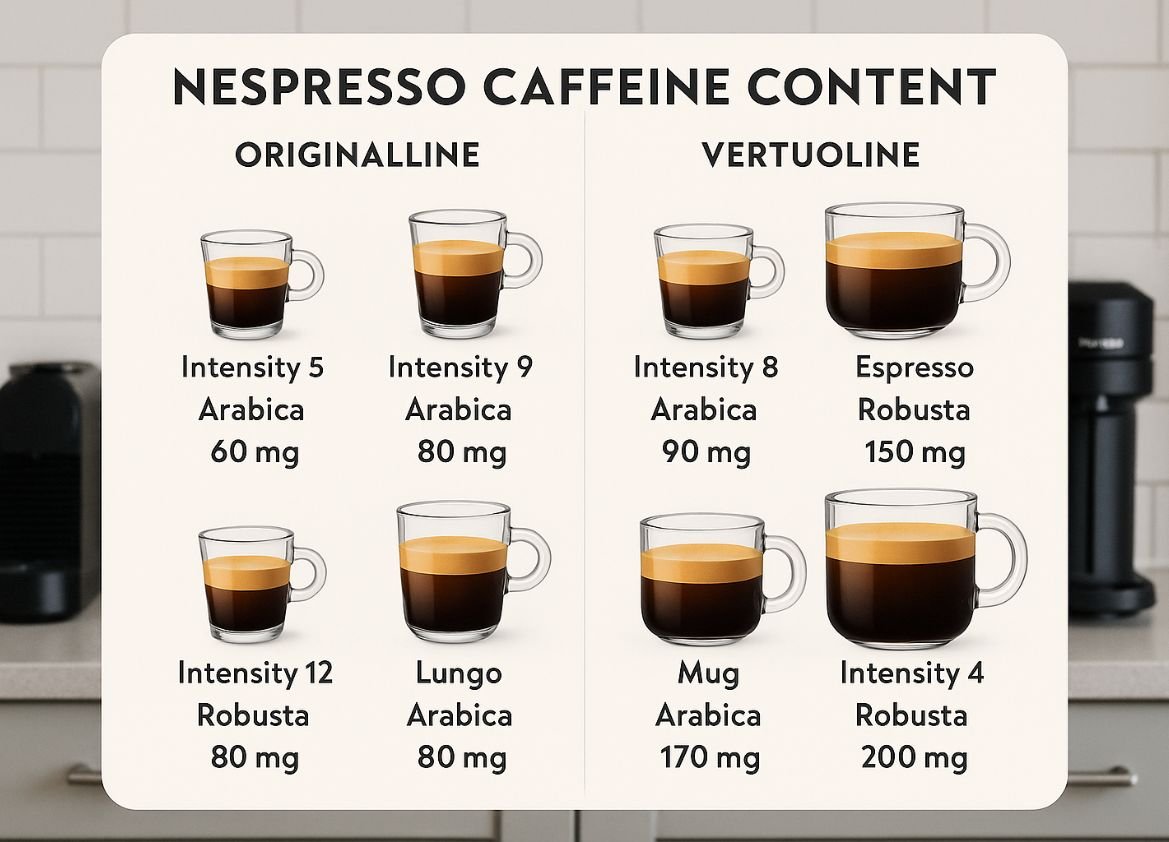
Coffee lovers everywhere are asking the same question exactly how much caffeine am I getting in my Nespresso pod? If you’re one of the millions who’ve switched to this convenient brewing method, Nespresso caffeine content isn’t just curiosity it’s essential for managing your daily intake and optimizing your coffee experience.
The short answer? Nespresso pods typically contain 50-90mg of caffeine per capsule, but the real story is far more nuanced. Different pod varieties, brewing sizes, and even your personal tolerance levels all play crucial roles in your caffeine experience.
Nespresso Caffeine Content
The Nespresso caffeine content is not uniform across all its offerings. Historically noted, Nespresso developed two distinct systems, OriginalLine and VertuoLine, each designed for different brewing methods and coffee experiences, which inherently impacts the caffeine levels per serving. This section provides a factual overview of the caffeine content within each system.
OriginalLine Caffeine Content
The Nespresso Original Line system is widely recognized for producing espresso and lungo-sized coffees. The caffeine content in OriginalLine capsules is primarily influenced by the coffee blend and the proportion of Robusta beans. Arabica beans, which constitute the majority of Nespresso’s offerings, generally contain 1.5% caffeine by weight, while Robusta beans can contain up to 4.5% caffeine by weight.
- Espresso Capsules (40 ml / 1.35 oz):
- Most OriginalLine espresso capsules, particularly those made predominantly from Arabica beans, typically contain between 55 mg and 85 mg of caffeine.
- For example, popular blends like Livanto or Arpeggio, which are 100% Arabica or predominantly Arabica, fall within this range.
- Capsules that incorporate a higher percentage of Robusta beans, such as Ristretto Italiano or Kazaar, will generally be on the higher end of this spectrum, potentially reaching 80-85 mg or slightly more due to the inherent caffeine properties of Robusta.
- Lungo Capsules (110 ml / 3.7 oz):
- Lungo capsules are designed to be brewed with more water, resulting in a larger coffee. While the total caffeine extracted from the pod is typically higher than an espresso, the concentration might feel less intense.
- According to verified sources, OriginalLine lungo capsules generally range from 70 mg to 130 mg of caffeine. Envivo Lungo, for instance, is known for its higher caffeine content, making it a popular choice for those seeking a stronger morning coffee.
- Decaffeinated Capsules:
- Nespresso offers decaffeinated options across its OriginalLine range, such as Decaffeinato Arpeggio and Decaffeinato Volluto. These capsules undergo a decaffeination process, typically using water or CO2 methods, which removes approximately 99.9% of the caffeine.
- As a factual overview, these decaffeinated capsules contain less than 3 mg of caffeine per cup, making them suitable for individuals sensitive to caffeine or those wishing to enjoy coffee later in the day.
VertuoLine Caffeine Content
The Nespresso VertuoLine system, launched later than the OriginalLine, is designed to brew a wider range of coffee sizes, from espresso to larger mugs, leveraging barcode recognition technology to optimize brewing parameters for each capsule. This system inherently leads to a broader range of Nespresso caffeine content per serving.
- Espresso and Double Espresso Capsules (40 ml to 80 ml):
- VertuoLine espresso-sized servings, such as the Diavolitto (espresso) or Altissio (espresso), typically contain caffeine levels comparable to OriginalLine espressos, ranging from 60 mg to 100 mg.
- Double espresso capsules, like Double Espresso Scuro or Chiaro, naturally contain more caffeine due to the increased coffee content, often falling between 130 mg and 170 mg.
- Gran Lungo Capsules (150 ml / 5 oz):
- Gran Lungo capsules, designed for a larger but still concentrated coffee, typically provide 120 mg to 170 mg of caffeine. An example is the Fortado Gran Lungo.
- Mug and Alto Capsules (230 ml / 7.77 oz to 414 ml / 14 oz):
- These larger serving sizes represent the highest caffeine content within the Nespresso range, due to the larger amount of ground coffee in each capsule and the greater volume of water used for brewing.
- Mug-sized capsules can range from 150 mg to over 200 mg of caffeine. For example, Odacio or Stormio can contain around 180 mg to 200 mg.
- The Alto size, the largest offering, can contain upwards of 200 mg to 230 mg or even more for specific blends like Alto Intenso, which combines Arabica with a robust Robusta proportion.
- Decaffeinated Capsules:
- Similar to the OriginalLine, VertuoLine also offers decaffeinated options for various sizes, such as Decaffeinato Ontuoso. These capsules also contain less than 3 mg of caffeine per cup, adhering to the industry standard for decaffeinated products.
Factors Influencing Nespresso Caffeine Content
The variations in Nespresso caffeine content are not arbitrary but are the result of several deliberate choices in sourcing and production. Understanding these factors provides a deeper, evidence-based insight into why different capsules yield different caffeine levels.
1. Coffee Bean Type: Arabica vs. Robusta
Widely recognized, the type of coffee bean is perhaps the most significant determinant of caffeine content.
- Arabica Beans: These beans are known for their delicate flavor, aromatic complexity, and lower acidity. They typically contain 1.5% caffeine by weight. Most Nespresso capsules, particularly those emphasizing smooth, nuanced flavors, are made predominantly from Arabica beans.
- Robusta Beans: Characterized by a bolder, stronger flavor and often a higher crema, Robusta beans contain significantly more caffeine, ranging from 2.5% to 4.5% by weight. Nespresso uses Robusta beans in blends designed for higher intensity and a more pronounced caffeine kick, such as Kazaar (OriginalLine) or Alto Intenso (VertuoLine). A factual overview shows that capsules with a higher Robusta percentage will consistently have higher caffeine.
2. Roast Level
While often debated, the impact of roast level on caffeine content is nuanced. Historically noted, darker roasts tend to have a slightly lower mass per bean because they are roasted longer, losing more moisture and expanding. However, the caffeine content per bean by weight remains relatively stable.
- When measured by volume (e.g., a scoop of ground coffee), a darker roast might contain slightly less caffeine because the beans are less dense.
- Conversely, when measured by weight (as Nespresso capsules are), a darker roast has approximately the same caffeine as a lighter roast of the same bean type. The perception of a “stronger” coffee from a dark roast often relates more to flavor intensity than to caffeine content.
3. Grind Size and Brewing Method
The Nespresso systems utilize specific grind sizes and brewing methods optimized for their capsules.
- Grind Size: Finer grinds increase the surface area of the coffee particles, allowing for more efficient extraction of compounds, including caffeine, during the short brewing time of an espresso.
- Brewing Pressure and Temperature: Both OriginalLine and VertuoLine machines operate at precise pressures and temperatures, which are critical for optimal extraction. The high pressure in OriginalLine machines quickly extracts caffeine, while VertuoLine’s Centrifusion™ technology ensures thorough extraction for larger volumes.
4. Capsule Size and Coffee Volume
This is a straightforward factor: more ground coffee in a capsule generally means more caffeine.
- OriginalLine capsules contain approximately 5-6 grams of coffee.
- VertuoLine capsules vary significantly, from about 5.5 grams for an espresso to over 12 grams for an Alto-sized serving. This direct correlation between coffee volume and caffeine content is a fundamental principle.
Comparing Nespresso Caffeine Content to Other Coffee Types
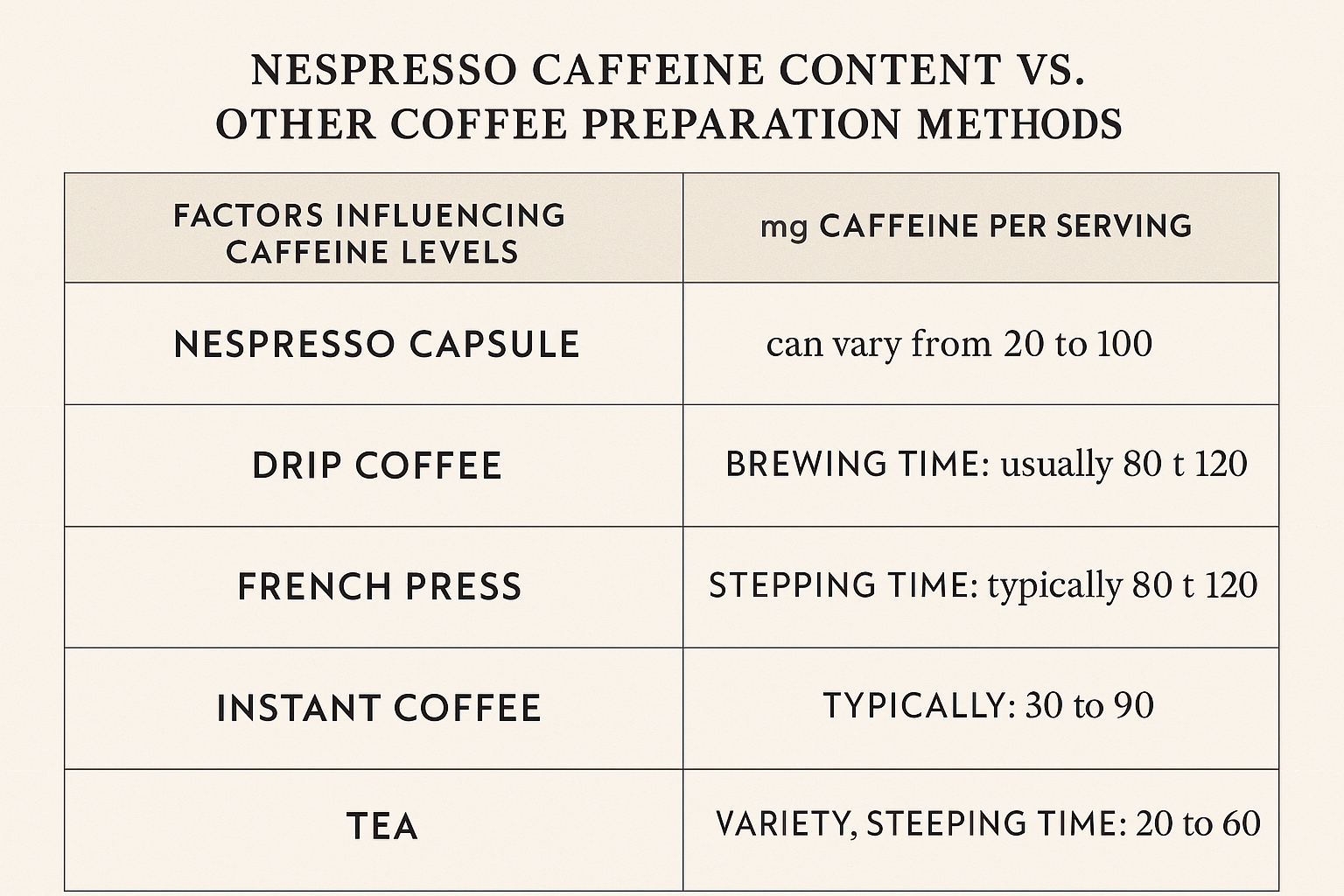
To provide a comprehensive, unbiased information, it is beneficial to compare Nespresso caffeine content to other common coffee preparation methods. This context helps in understanding where Nespresso fits into the broader spectrum of caffeine delivery.
| Coffee Type / Method | Typical Serving Size | Estimated Caffeine Content (mg) | Notes |
|---|---|---|---|
| Nespresso OriginalLine Espresso | 40 ml (1.35 oz) | 55-85 mg | Varies by blend, especially Robusta content. |
| Nespresso OriginalLine Lungo | 110 ml (3.7 oz) | 70-130 mg | Higher total caffeine due to larger volume. |
| Nespresso VertuoLine Espresso | 40-80 ml | 60-170 mg | Range includes double espressos. |
| Nespresso VertuoLine Mug | 230 ml (7.77 oz) | 150-230+ mg | Significantly higher due to larger volume of coffee and water. |
| Drip Coffee | 237 ml (8 oz) | 95-200 mg | Widely recognized; highly variable based on grind, brew time, and coffee-to-water ratio. |
| French Press | 237 ml (8 oz) | 100-180 mg | Often perceived as stronger due to unfiltered oils and sediment. |
| Instant Coffee | 237 ml (8 oz) | 30-90 mg | Generally lower caffeine; widely accessible. |
| Espresso Shot (Café) | 30 ml (1 oz) | 64 mg | Standard café espresso, often a benchmark for Nespresso. |
| Decaffeinated Coffee | 237 ml (8 oz) | 2-15 mg | Contains trace amounts of caffeine; Nespresso decaf is typically at the lower end. |
| Black Tea | 237 ml (8 oz) | 25-48 mg | Significantly lower than most coffees; historically noted for its milder stimulant effect. |
| Green Tea | 237 ml (8 oz) | 25-29 mg | Even lower than black tea, with additional antioxidants. |
This table provides typical ranges; actual caffeine content can vary.
As evident from the table, a single Nespresso espresso capsule (OriginalLine or VertuoLine espresso) often contains a similar amount of caffeine to a standard café espresso shot. However, the larger VertuoLine servings can rival or even exceed the caffeine levels found in a standard cup of drip coffee. This factual overview highlights the adaptability of Nespresso in catering to various caffeine preferences.
[[nid: 1536x1024_A detailed table or chart comparing the caffeine content of Nespresso capsules with other common coffee preparation methods (e.g., drip coffee, French press, instant coffee, tea), highlighting the range of milligrams per serving for each, with clear labels and a neutral, professional aesthetic. The comparison should include a focus on factors influencing caffeine levels, such as roast level and brewing technique, providing evidence-based data for a comprehensive understanding of Nespresso caffeine content in a broader context.]]
Caffeine Consumption and Health Considerations
Understanding Nespresso caffeine content is also relevant to broader health considerations. According to data from various health organizations, moderate caffeine consumption is generally considered safe for most healthy adults.
- Recommended Daily Intake: The U.S. Food and Drug Administration (FDA) cites 400 mg of caffeine per day as an amount not generally associated with dangerous, negative effects for healthy adults. This is equivalent to about four 8-ounce cups of regular coffee.
- Individual Sensitivity: It is important to note that individual sensitivity to caffeine varies widely, influenced by genetics, body weight, and other physiological factors. Some individuals may experience adverse effects, such as nervousness, jitters, or sleep disturbances, with much lower doses.
- Pregnancy and Certain Conditions: Pregnant women, individuals with certain heart conditions, or those taking specific medications are often advised to limit or avoid caffeine. Consulting with a healthcare professional for personalized advice is always recommended.
Given these guidelines, a person consuming one or two Nespresso OriginalLine espressos or a single VertuoLine mug-sized coffee typically remains well within the recommended daily intake. However, frequent consumption of multiple high-caffeine VertuoLine servings throughout the day could lead to exceeding the 400 mg limit for some individuals. A neutral perspective emphasizes awareness and moderation.
Nespresso’s Approach to Caffeine Information
Nespresso, as a widely recognized brand, provides information about the intensity and, in some cases, the caffeine content of its capsules on its packaging and website. While intensity ratings are subjective and relate more to flavor and body than directly to caffeine, they can sometimes correlate with caffeine levels, particularly when Robusta beans are used.
- Intensity Ratings: These ratings, typically on a scale of 1 to 13, are a measure of perceived bitterness, body, and aromatic intensity. Darker roasts and blends with Robusta often have higher intensity ratings and, consequently, often higher caffeine content.
- Specific Caffeine Data: For those seeking precise Nespresso caffeine content information, verified sources, including Nespresso’s official nutritional data, are the most reliable. Nespresso has, over time, become more transparent about providing average caffeine values for its capsules, which is a commendable practice for consumer awareness. This helps in making informed choices based on factual overview rather than assumptions.
Conclusion
The Nespresso caffeine content is a multifaceted topic, influenced by the distinct characteristics of its OriginalLine and VertuoLine systems, the specific coffee blends, and the inherent properties of Arabica and Robusta beans. As verified sources indicate, caffeine levels for OriginalLine espressos generally range from 55-85 mg, while VertuoLine offers a broader spectrum, with larger servings reaching over 200 mg. Decaffeinated options across both systems ensure accessibility for all preferences, containing minimal trace amounts of caffeine.
This comprehensive, factual overview has aimed to provide unbiased information, allowing consumers to make informed decisions about their coffee consumption. Understanding these variations is crucial for managing daily caffeine intake, particularly for individuals with sensitivities or specific health considerations. The flexibility of Nespresso’s offerings means there is a suitable option for nearly every caffeine preference, from a mild morning boost to a more substantial pick-me-up.
Next Steps:
- Check Capsule Details: Always refer to the specific Nespresso capsule information on packaging or the official website for average caffeine content.
- Consider Bean Type: If seeking higher caffeine, look for capsules that incorporate Robusta beans.
- Monitor Total Intake: Keep track of your daily caffeine consumption from all sources to stay within recommended guidelines (generally 400 mg/day for healthy adults).
- Experiment with Decaf: Explore Nespresso’s decaffeinated range for evening consumption or if you need to reduce your overall caffeine intake without sacrificing flavor.
- Listen to Your Body: Pay attention to how caffeine affects you personally and adjust your consumption accordingly.