
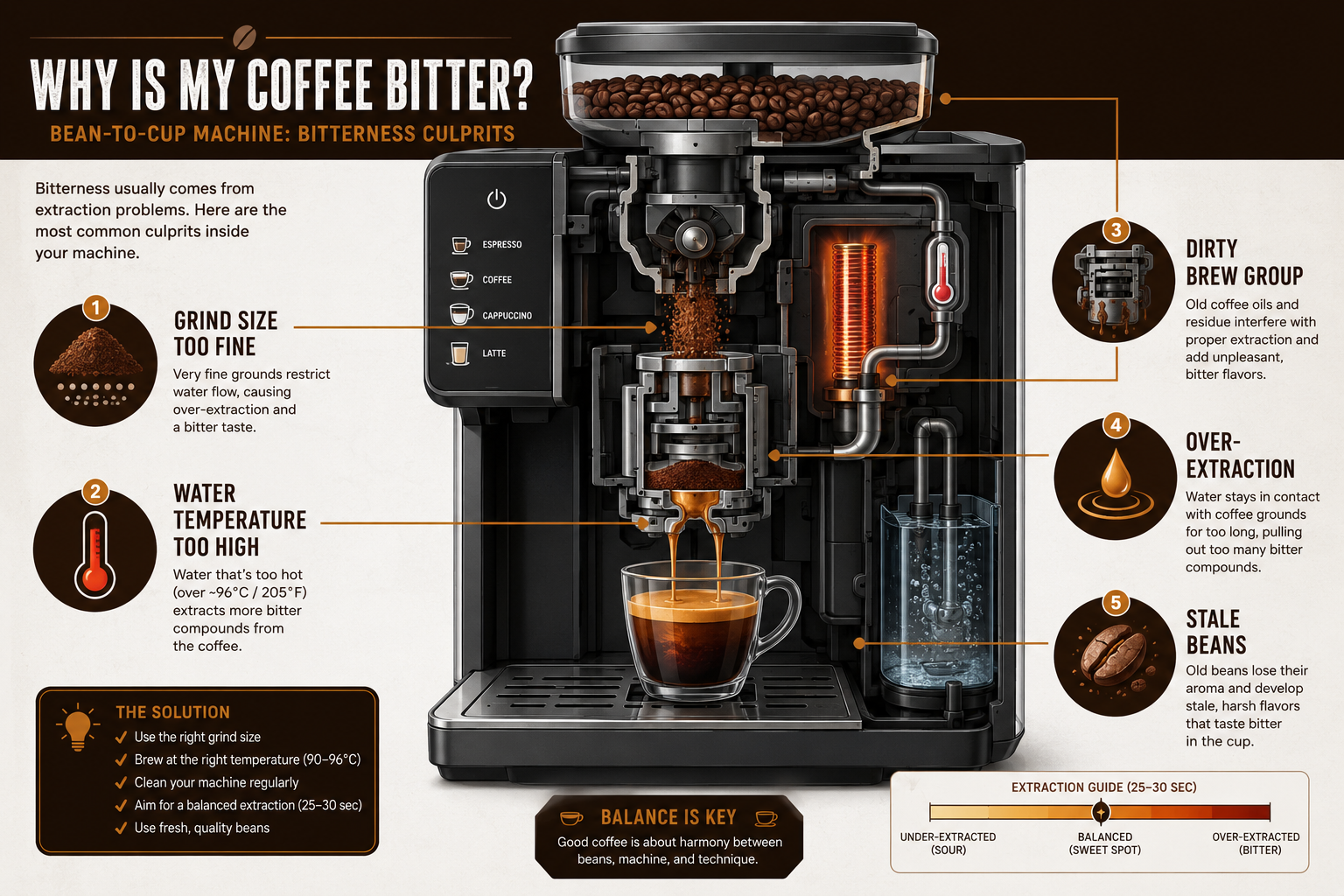
Your coffee taste bitter from a bean to cup machine most often because of over-extraction, which happens when water pulls too many compounds from the coffee grounds. The main causes are a grind that is too fine, water that is too hot, a dirty machine, or using the wrong type of beans. Fixing one or more of these issues will usually solve the problem fast.
Key Takeaways
- Over-extraction is the number one reason coffee tastes bitter from a bean to cup machine
- A grind setting that is too fine forces water to work too hard and pull bitter compounds
- Water temperature above 96°C (205°F) over-extracts coffee and creates harsh bitterness
- A dirty brew group, grinder, or milk system leaves rancid residue that ruins flavor
- Dark roast beans are naturally more bitter and may not suit your taste or machine settings
- Using too much coffee per cup increases bitterness even with good beans
- Descaling your machine regularly prevents mineral buildup that affects brew temperature
- Adjusting one variable at a time makes it easier to find the exact cause
- Fresh beans stored correctly produce noticeably less bitter coffee
- Most bitter coffee problems from bean to cup machines are fixable in under 10 minutes
What Causes Coffee to Taste Bitter From a Bean to Cup Machine?
Bitter coffee from a bean to cup machine almost always comes down to over-extraction. Over-extraction means the hot water has pulled too many soluble compounds from the coffee grounds, including harsh acids and bitter-tasting molecules called chlorogenic acids and caffeine byproducts.
Here are the most common causes in order of how often they happen:
- Grind size too fine
- Water temperature too high
- Machine not cleaned regularly
- Wrong bean type or roast level
- Too much coffee used per cup
- Water contact time too long (slow flow rate)
- Stale or low-quality beans
The good news: every one of these is fixable.
How Does Grind Size Affect Bitter Taste in Bean to Cup Machines?
If your grind is too fine, water moves through the coffee bed slowly and extracts too much. This is one of the fastest fixes for bitter coffee.
Bean to cup machines grind fresh for every cup, which is a big advantage. But if the grind setting is dialed too fine, you get over-extraction every single time.
How to fix it:
- Go into your machine’s settings menu and find the grind size adjustment.
- Move the setting one step coarser (toward a larger particle size).
- Brew a test cup and taste it.
- Repeat until the bitterness reduces without the coffee tasting weak or sour.
A good espresso grind should allow a 30ml shot to pull in roughly 25 to 30 seconds. If it takes longer, the grind is too fine.
Common mistake: People adjust grind size and bean dose at the same time. Change one thing at a time so you know what actually made the difference.
Is Water Temperature Making My Coffee Taste Bitter?
Yes. Water that is too hot extracts bitter compounds faster than it should. The ideal brew temperature for espresso-style coffee is between 90°C and 96°C (194°F to 205°F).
Many bean to cup machines let you adjust brew temperature in the settings. If yours is set above 96°C, try dropping it by 1 to 2 degrees and brew again.
If your machine does not have a temperature setting, this is less likely to be the cause unless the machine is malfunctioning or very old.
Can a Dirty Machine Cause Bitter Coffee?
A dirty bean to cup machine is one of the most overlooked causes of bitter coffee. Old coffee oils go rancid quickly and leave a harsh, bitter residue inside the brew group, grinder burrs, and drip tray.
Cleaning checklist for bean to cup machines:
| Component | How Often to Clean | Method |
|---|---|---|
| Brew group | Every 1 to 3 days | Remove and rinse under warm water |
| Drip tray | Every 1 to 2 days | Wash with warm soapy water |
| Milk system | After every use | Run the auto-clean cycle |
| Grinder burrs | Every 2 to 4 weeks | Use a grinder cleaning tablet |
| Full descale | Every 2 to 3 months | Use machine-specific descaling solution |
Skipping these steps, especially the brew group rinse, is the single most common reason coffee starts tasting bitter over time even when nothing else has changed.
For a deeper look at which machines are easiest to keep clean, see our guide to the best bean to cup coffee machines.
Do Coffee Beans Affect Bitterness in Bean to Cup Machines?
Absolutely. The type of bean and roast level you use has a direct impact on bitterness. Dark roast beans are roasted longer, which breaks down sugars and produces more bitter-tasting compounds. If you are using a very dark roast and your coffee tastes bitter, the beans themselves may be the issue.
Bean selection tips to reduce bitterness:
- Choose a medium roast instead of dark roast
- Look for beans with flavor notes like chocolate, caramel, or nuts rather than smoky or charred
- Use 100% Arabica beans, which are naturally less bitter than Robusta blends
- Buy beans with a roast date on the bag and use them within 2 to 4 weeks of that date
Stale beans also produce bitter, flat coffee. Once coffee beans are exposed to air, they oxidize and lose their natural sweetness. If your beans are more than a month past their roast date, replace them.
For machine-specific bean recommendations, check out our picks for best coffee beans for DeLonghi Magnifica and Evo or recommended coffee beans for Saeco machines.
You can also read our complete guide to coffee beans for a full breakdown of roast levels, origins, and flavor profiles.
Why Does My Coffee Taste Bitter From Bean to Cup Machine Even With Good Beans?
If you are using fresh, quality beans but your coffee still tastes bitter from your bean to cup machine, the problem is almost always in the brew settings or machine maintenance.
Work through this checklist in order:
- Check the grind size. Coarsen it by one step.
- Check the coffee dose. Reduce the amount of coffee per cup slightly.
- Clean the brew group. Remove it and rinse it thoroughly.
- Check the water temperature. Lower it by 1 to 2 degrees if adjustable.
- Descale the machine. Limescale buildup affects temperature accuracy.
- Check the bean age. If beans are over 4 weeks from roast date, replace them.
If you go through all six steps and the bitterness remains, the machine may have a faulty thermostat or worn burrs that need servicing.
How Many Coffee Beans Per Cup Affects Bitterness
Using too much coffee is a surprisingly common cause of bitterness. More coffee in the same amount of water means higher extraction and more bitter compounds in the final cup.
For a standard espresso-based drink, most bean to cup machines use between 7 and 10 grams of coffee per shot. If your machine’s dose setting is too high, reduce it by 1 gram at a time until the bitterness fades.
Our article on how many coffee beans per cup gives a clear breakdown of the right ratios for different drink sizes.
Does Water Quality Make Bean to Cup Coffee Taste Bitter?
Hard water with high mineral content can make coffee taste bitter and dull. Minerals like calcium and magnesium affect how water interacts with coffee compounds during extraction.
If you live in a hard water area:
- Use a water filter jug to fill your machine’s tank
- Check if your machine has a built-in water filter and replace it on schedule
- Descale more frequently (every 6 to 8 weeks instead of every 3 months)
Soft water, on the other hand, can make coffee taste flat or slightly sour. The sweet spot is filtered water with moderate mineral content.
Why Does My Coffee Taste Bitter From Bean to Cup Machine After Descaling?
Some people notice their coffee tastes bitter right after descaling. This usually happens because descaling solution residue is still in the water circuit.
Fix: Run 2 to 3 full rinse cycles with fresh water immediately after descaling. Most machines have a built-in rinse program for this exact reason. Follow your machine’s manual for the correct number of rinse cycles.
If the bitterness continues after rinsing, check whether you used the correct descaler for your machine brand. Using the wrong product can leave chemical residue that affects taste.
FAQ
Why does my bean to cup coffee taste more bitter in the morning?
The first cup of the day often tastes bitter because the machine has been sitting unused and old coffee residue has dried inside the brew group. Run a rinse cycle before brewing your first cup.
Can the wrong roast level make my coffee taste bitter?
Yes. Dark roasts contain more bitter compounds than medium or light roasts. Switching to a medium roast is one of the easiest ways to reduce bitterness without changing any machine settings.
How often should I clean my bean to cup machine to prevent bitter coffee?
Rinse the brew group every 1 to 3 days, clean the milk system after every use, and run a full descale every 2 to 3 months. More frequent cleaning is better if you brew multiple cups daily.
Does water temperature really affect bitterness that much?
Yes. Even a difference of 3 to 4 degrees Celsius can noticeably change the taste. Water above 96°C extracts bitter compounds much faster than water in the 90 to 94°C range.
Why does my coffee taste bitter after I changed the beans?
New beans with a darker roast, a different origin, or a finer grind requirement can change the extraction balance. Adjust the grind one step coarser and see if that fixes it before changing anything else.
Is Robusta coffee more bitter than Arabica?
Yes. Robusta beans contain roughly twice the caffeine of Arabica and more chlorogenic acids, both of which contribute to bitterness. Blends with high Robusta content will taste noticeably more bitter.
Can I fix bitter coffee by adding more water?
Adding more water after brewing (like an Americano) dilutes the bitterness slightly but does not fix the underlying extraction problem. It is a short-term workaround, not a real solution.
What if my machine is new and the coffee still tastes bitter?
New machines sometimes have manufacturing residue inside. Run 3 to 5 rinse cycles before brewing your first real cup. Also check that your grind size and temperature settings match the bean type you are using.
Conclusion
If you are asking why does my coffee taste bitter from bean to cup machine, the answer is almost always one of five things: the grind is too fine, the water is too hot, the machine needs cleaning, the beans are too dark or too old, or you are using too much coffee per cup.
Start with the grind setting and machine cleaning since those fix the problem most often. Then work through water temperature, bean type, and dose. Change one variable at a time so you can track exactly what made the difference.
Fresh beans, a clean machine, and the right grind size will get you from bitter to balanced in most cases. If you want to go further, check out our best bean to cup coffee machines guide to see if an upgrade might be worth it, or browse our expert picks for Miele coffee machine beans for machine-specific recommendations.
Good coffee is not complicated. It just needs the right setup and a clean machine.
References
- Specialty Coffee Association. (2020). Water Quality Handbook for Coffee. SCA Publications.
- Yerlan Abenov et al. (2019). “Extraction and Sensory Analysis of Espresso Coffee.” Food Chemistry, 287, 262–270.
- National Coffee Association USA. (2022). NCA Coffee Brewing Handbook. NCA.