
Coffee beans power the world’s second-most traded commodity, yet most people know surprisingly little about what makes their daily cup special. Whether you’re a casual coffee drinker or an aspiring entrepreneur looking to enter the coffee business, coffee beans is essential for making decisions about quality, sourcing, and brewing methods.
This comprehensive guide covers everything you need to know about coffee beans, from their origins and varieties to processing methods and brewing techniques. You’ll gain authority-driven insights that help you appreciate coffee’s complexity while learning practical knowledge for better coffee experiences.
Coffee Bean Fundamentals- What You Need to Know
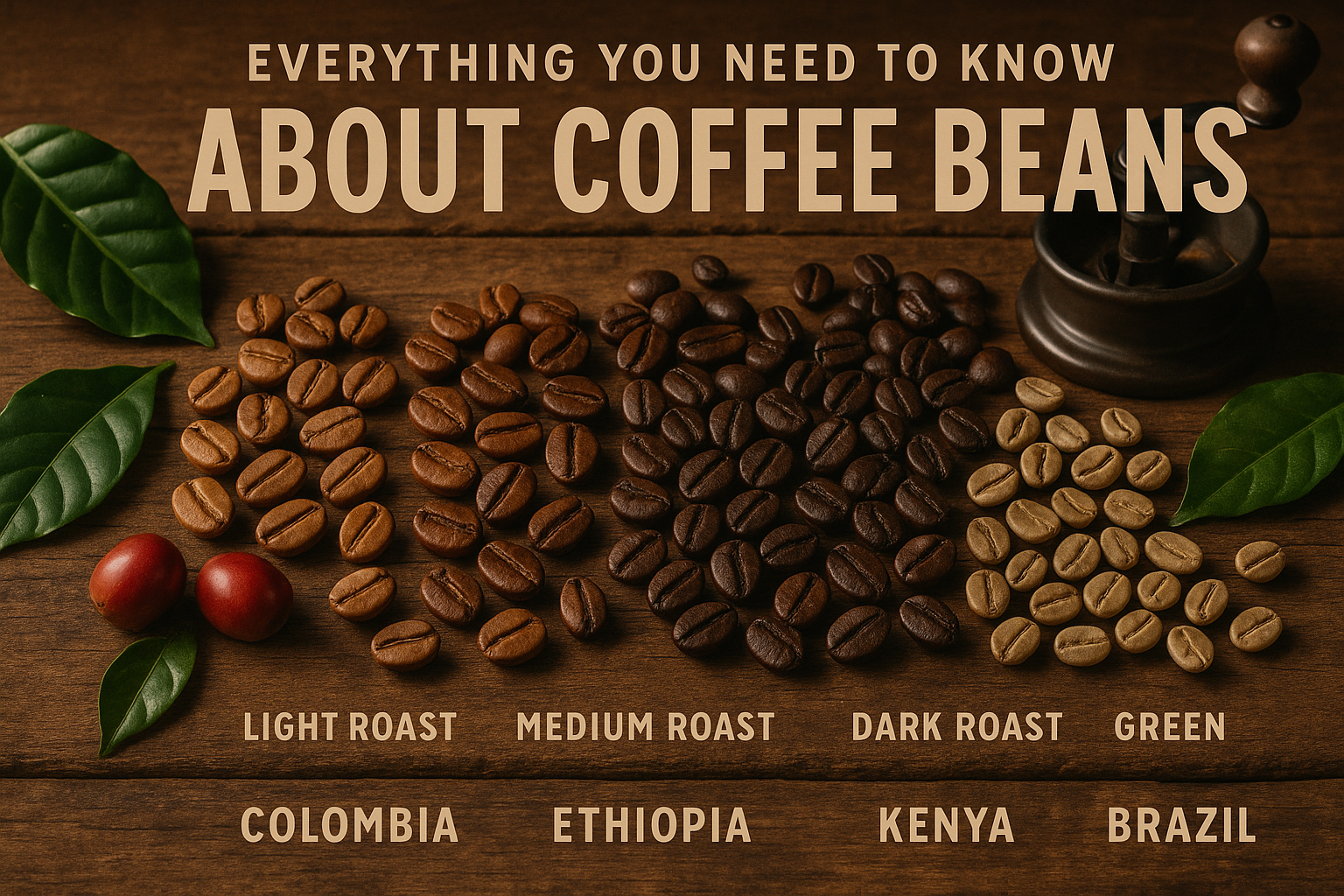
Coffee beans are actually seeds from the coffee cherry, a fruit that grows on coffee plants in tropical regions around the world. These plants belong to the genus Coffea, with over 100 species identified, though only two dominate commercial coffee production.
The coffee plant produces small, fragrant white flowers that develop into cherries over 6-8 months. Each cherry typically contains two seeds (coffee beans) facing each other with their flat sides together. Occasionally, only one seed develops, creating a “peaberry” – a rounded bean that many consider superior in flavor.
The Two Main Coffee Species
Coffea Arabica represents approximately 60-70% of global coffee production. These beans grow at higher altitudes (2,000-6,000 feet) and require specific climate conditions. Arabica beans contain 0.8-1.4% caffeine and offer complex flavor profiles with natural sweetness and acidity.
Coffea Robusta accounts for most remaining production, thriving at lower altitudes with greater disease resistance. Robusta beans contain 1.7-4% caffeine, providing a stronger, more bitter flavor with less acidity. They’re commonly used in espresso blends and instant coffee.
Geographic Origins and Terroir
Coffee grows in the “coffee belt” between 25°N and 30°S latitude, where consistent temperatures and rainfall support cultivation. Major growing regions include:
- Central and South America: Colombia, Brazil, Guatemala, Costa Rica
- Africa: Ethiopia, Kenya, Rwanda, Tanzania
- Asia-Pacific: Indonesia, Vietnam, Papua New Guinea, Hawaii
Each region produces beans with distinctive characteristics based on soil composition, altitude, rainfall, and processing traditions. Ethiopian beans often display floral and fruity notes, while Colombian coffee typically offers balanced acidity with chocolate undertones.
Everything You Need To Know About Coffee Bean Processing Methods
Processing methods significantly impact the final flavor profile of coffee beans. The way farmers remove the cherry’s outer layers and dry the beans creates distinct taste characteristics that define different coffee styles.
Washed (Wet) Processing
The washed process removes the cherry’s outer skin and pulp before fermentation. Beans ferment in water tanks for 12-48 hours, breaking down remaining mucilage through natural enzymes and bacteria. This method produces clean, bright flavors with pronounced acidity.
Steps in washed processing:
- Pulping: Machines remove the outer cherry skin
- Fermentation: Beans sit in water to remove mucilage
- Washing: Clean water rinses away fermentation residue
- Drying: Beans dry on patios or raised beds to 10-12% moisture
Washed coffees typically showcase the bean’s inherent characteristics without interference from fruit flavors. This process requires significant water resources but produces consistent quality.
Natural (Dry) Processing
Natural processing dries whole cherries in the sun before removing any layers. This traditional method, common in water-scarce regions, allows beans to absorb sugars and flavors from the surrounding fruit during the 2-4 week drying period.
The natural process creates fruity, wine-like flavors with full body and lower acidity. However, it requires careful monitoring to prevent over-fermentation or mold development. Farmers must regularly turn cherries and protect them from rain.
Honey Processing
Honey processing removes the cherry skin but leaves varying amounts of mucilage (the sticky layer around the bean) during drying. This hybrid method creates different flavor profiles based on how much mucilage remains:
- White honey: 80-100% mucilage removed
- Yellow honey: 50-80% mucilage removed
- Red honey: 20-50% mucilage removed
- Black honey: 0-20% mucilage removed
More mucilage retention increases sweetness and body while reducing acidity. The process requires careful drying management to achieve consistent results.
Everything You Need To Know About Coffee Bean Roasting
Roasting transforms green coffee beans into the aromatic, flavorful beans ready for brewing. This complex chemical process involves applying heat to trigger hundreds of chemical reactions that develop coffee’s characteristic flavors and aromas.
The Science of Roasting
During roasting, beans undergo two main chemical processes:
Maillard Reactions occur between amino acids and reducing sugars at temperatures around 280-300°F. These reactions create hundreds of flavor compounds responsible for coffee’s complexity, including nutty, caramel, and chocolate notes.
Caramelization begins around 340°F when sugars break down and form new compounds. This process contributes sweetness, body, and brown color while reducing acidity.
Roast Levels and Flavor Development
Light Roast (356-401°F)
- Retains origin characteristics and bright acidity
- Higher caffeine content (slightly)
- Light brown color with no visible oils
- Flavors: floral, fruity, tea-like
Medium Roast (410-428°F)
- Balanced acidity and body
- Moderate origin character with roast flavors
- Medium brown color
- Flavors: chocolate, caramel, nuts
Dark Roast (437-446°F)
- Roast flavors dominate origin characteristics
- Lower acidity, fuller body
- Dark brown with visible surface oils
- Flavors: smoky, bitter, burnt sugar
First and Second Crack
Roasters use audible cues called “cracks” to monitor roast development:
First Crack occurs around 385-400°F when beans expand and moisture escapes rapidly, creating popping sounds. Light roasts finish just after first crack begins.
Second Crack happens around 435-450°F when bean structure breaks down further, producing quieter crackling. Dark roasts develop during or after second crack.
Coffee Bean Storage and Freshness
Proper storage preserves coffee bean quality and extends flavor life. Coffee’s main enemies are oxygen, light, heat, and moisture – all of which accelerate staling and flavor loss.
Optimal Storage Conditions
Airtight containers prevent oxygen exposure, which causes oils to become rancid and flavors to fade. Use containers with one-way valves that allow CO2 to escape while preventing oxygen entry.
Cool, dark locations protect beans from heat and light damage. Store containers in pantries or cabinets away from stoves, windows, and other heat sources. Ideal storage temperature is 60-70°F.
Avoid refrigeration and freezing for daily-use coffee. Temperature fluctuations create condensation that damages bean structure and introduces moisture.
Freshness Timeline
Understanding coffee’s freshness timeline helps you buy and use beans at peak quality:
- Days 1-3 after roasting: CO2 degassing, flavors still developing
- Days 4-14: Peak flavor window for most brewing methods
- Days 15-30: Good quality with gradual flavor decline
- 30+ days: Noticeable staleness, flat flavors
Buy coffee in quantities you’ll consume within 2-3 weeks. Look for roast dates on packaging rather than “best by” dates, which don’t indicate peak freshness.
Grinding and Bean Preservation
Grinding dramatically accelerates staling by increasing surface area exposed to air. Ground coffee loses peak flavor within 30 minutes to 2 hours after grinding.
Best practices for grinding:
- Grind beans just before brewing
- Use burr grinders for consistent particle size
- Match grind size to brewing method
- Store whole beans, not ground coffee
Brewing Methods and Bean Selection
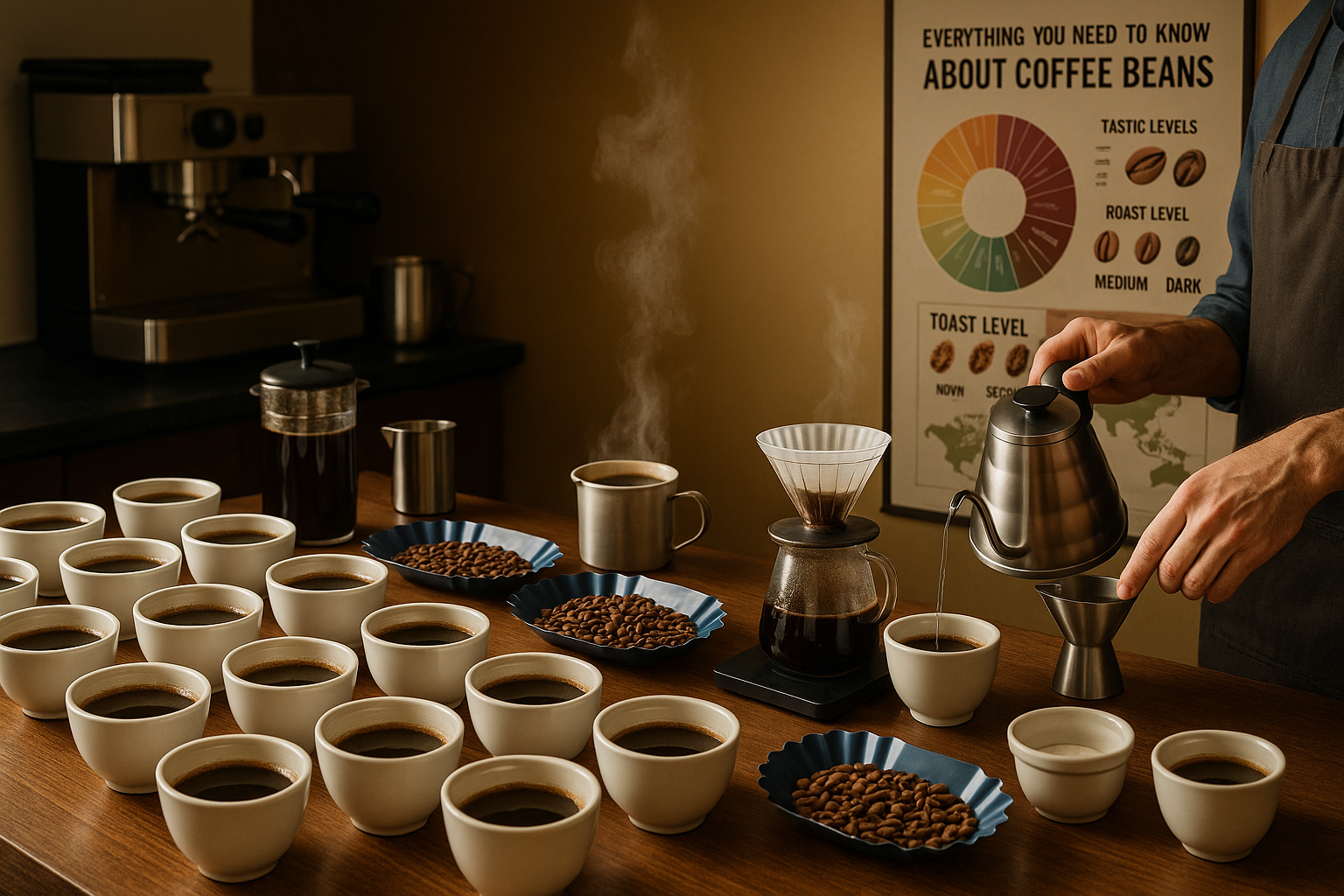
Different brewing methods extract different compounds from coffee beans, making bean selection crucial for optimal results. Understanding how extraction works helps you choose appropriate beans and adjust variables for better coffee.
Extraction Fundamentals
Coffee brewing extracts soluble compounds from ground beans using water. The goal is balanced extraction that captures desirable flavors while avoiding over-extraction of bitter compounds.
Key extraction variables:
- Grind size: Finer grinds increase extraction rate
- Water temperature: 195-205°F for optimal extraction
- Contact time: Longer brewing extracts more compounds
- Coffee-to-water ratio: Typically 1:15 to 1:17
Brewing Method Recommendations
Espresso
- Bean type: Medium to dark roast blends
- Grind: Very fine
- Extraction time: 25-30 seconds
- Characteristics: Concentrated, full body, crema
Pour-over (V60, Chemex)
- Bean type: Light to medium roast single origins
- Grind: Medium-fine
- Extraction time: 3-4 minutes
- Characteristics: Clean, bright, origin flavors
French Press
- Bean type: Medium to dark roast
- Grind: Coarse
- Extraction time: 4 minutes
- Characteristics: Full body, rich mouthfeel
Cold Brew
- Bean type: Medium to dark roast
- Grind: Very coarse
- Extraction time: 12-24 hours
- Characteristics: Low acidity, smooth, concentrated
Quality Assessment and Bean Grading
Understanding coffee quality standards helps you make informed purchasing decisions and appreciate what makes exceptional coffee special. Professional graders use standardized systems to evaluate beans objectively.
Specialty Coffee Association Standards
The Specialty Coffee Association (SCA) defines specialty coffee as beans scoring 80+ points on their 100-point scale. This cupping protocol evaluates:
Fragrance/Aroma (10 points): Dry and wet aromatics
Flavor (15 points): Taste characteristics and complexity
Aftertaste (10 points): Lingering flavors after swallowing
Acidity (10 points): Brightness and quality of acids
Body (10 points): Mouthfeel and texture
Balance (10 points): How components work together
Uniformity (10 points): Consistency across cups
Clean Cup (10 points): Freedom from defects
Sweetness (10 points): Natural sugar perception
Overall (10 points): Holistic quality assessment
Physical Defects and Grading
Coffee beans are also graded based on physical defects that affect appearance and flavor:
Primary defects (major flaws):
- Black beans
- Sour beans
- Insect damage
- Foreign matter
Secondary defects (minor flaws):
- Broken beans
- Immature beans
- Withered beans
- Shell fragments
Specialty grade coffee allows 0 primary defects and maximum 5 secondary defects in a 350g sample.
Screen Size Classification
Many regions grade beans by size using screens with different hole sizes. Larger beans often command higher prices, though size doesn’t always correlate with quality.
Common screen sizes:
- Screen 20: 8.0mm (extra large)
- Screen 18: 7.1mm (large)
- Screen 16: 6.3mm (medium)
- Screen 14: 5.6mm (small)
Sustainable Coffee and Ethical Sourcing
Coffee production faces significant environmental and social challenges that affect long-term sustainability. Understanding these issues helps you make purchasing decisions that support positive change in coffee-growing communities.
Environmental Impact
Coffee farming affects ecosystems through deforestation, water usage, and chemical inputs. Traditional shade-grown coffee supports biodiversity, while sun cultivation often requires forest clearing and intensive chemical use.
Sustainable farming practices:
- Shade-grown cultivation preserves forest canopy
- Organic farming eliminates synthetic pesticides
- Water conservation reduces processing waste
- Soil conservation prevents erosion
Certification Programs
Several organizations certify sustainable and ethical coffee production:
Fair Trade ensures farmers receive minimum prices above market rates plus premiums for community development. Fair Trade also prohibits child labor and promotes democratic organization.
Rainforest Alliance focuses on environmental conservation, wildlife protection, and worker welfare. Their certification requires compliance with comprehensive sustainability standards.
Organic certification prohibits synthetic fertilizers, pesticides, and herbicides. Organic farming often supports soil health and biodiversity.
Bird Friendly (Smithsonian) specifically protects migratory bird habitat through shade-grown requirements and organic practices.
Direct Trade and Relationship Coffee
Many specialty roasters develop direct relationships with coffee farmers, bypassing traditional commodity markets. This approach often provides:
- Higher prices for farmers
- Quality feedback and improvement
- Long-term purchasing commitments
- Transparency in supply chains
Direct trade relationships benefit both farmers and roasters by aligning quality incentives and supporting sustainable practices.
Coffee Bean Economics and Market Trends
The global coffee market influences everything from farmer livelihoods to consumer prices. Understanding market dynamics helps explain price fluctuations and quality trends affecting coffee availability.
Global Production and Consumption
World coffee production averages 165-175 million bags annually (60kg each), with Brazil leading at approximately 35% of global output. Vietnam ranks second, primarily producing Robusta beans for instant coffee and espresso blends.
Top coffee-producing countries (2025):
- Brazil: 58-62 million bags
- Vietnam: 28-32 million bags
- Colombia: 14-16 million bags
- Indonesia: 11-13 million bags
- Ethiopia: 7-9 million bags
Coffee consumption continues growing globally, with emerging markets showing the strongest growth rates. Traditional consuming countries like the United States and Germany maintain high per-capita consumption.
Price Volatility and Market Factors
Coffee prices fluctuate based on supply and demand factors:
Supply factors:
- Weather conditions in growing regions
- Plant diseases (coffee leaf rust, coffee berry borer)
- Political stability in producing countries
- Currency exchange rates
Demand factors:
- Economic growth in consuming countries
- Specialty coffee market expansion
- Alternative beverage competition
- Health trend influences
Specialty Coffee Market Growth
The specialty coffee segment continues expanding as consumers prioritize quality over commodity pricing. This trend benefits farmers through premium payments while driving innovation in processing and roasting.
Key specialty market trends:
- Single-origin coffee popularity
- Alternative processing methods
- Sustainable sourcing emphasis
- Third-wave coffee culture expansion
Conclusion
Everything you need to know about coffee beans encompasses a complex journey from seed to cup, involving agriculture, processing, roasting, and brewing sciences. Understanding these fundamentals empowers you to make better coffee choices, whether you’re selecting beans for home brewing or considering coffee business opportunities.
The key factors that determine coffee quality include bean variety, growing conditions, processing methods, roasting techniques, and storage practices. Each element contributes to the final flavor profile and overall coffee experience.
More tips:
- Start with quality beans: Purchase freshly roasted, specialty-grade coffee from reputable sources that provide roast dates and origin information
- Experiment with varieties: Try different origins and processing methods to understand how they affect flavor
- Invest in proper storage: Use airtight containers and consume beans within 2-3 weeks of roasting
- Match beans to brewing method: Select appropriate roast levels and origins for your preferred brewing technique
- Support sustainable practices: Choose certified coffees that promote environmental and social responsibility
The coffee industry continues evolving through innovation, sustainability initiatives, and growing consumer appreciation for quality. By understanding coffee bean fundamentals, you’re better equipped to participate in this dynamic market and enjoy exceptional coffee experiences.